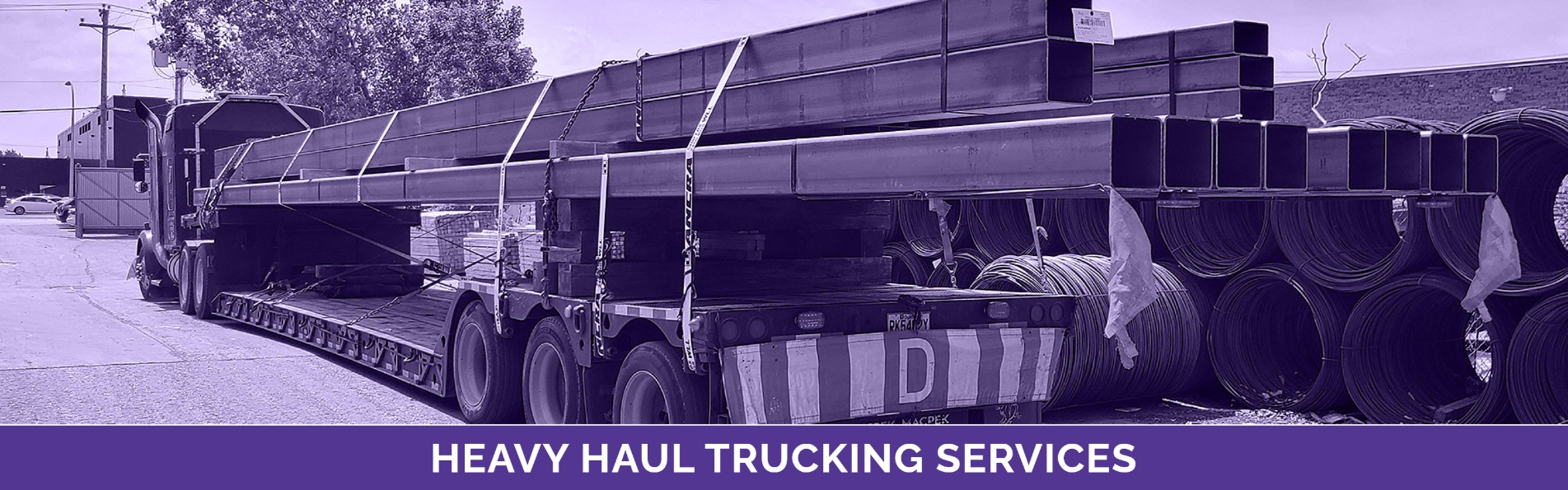
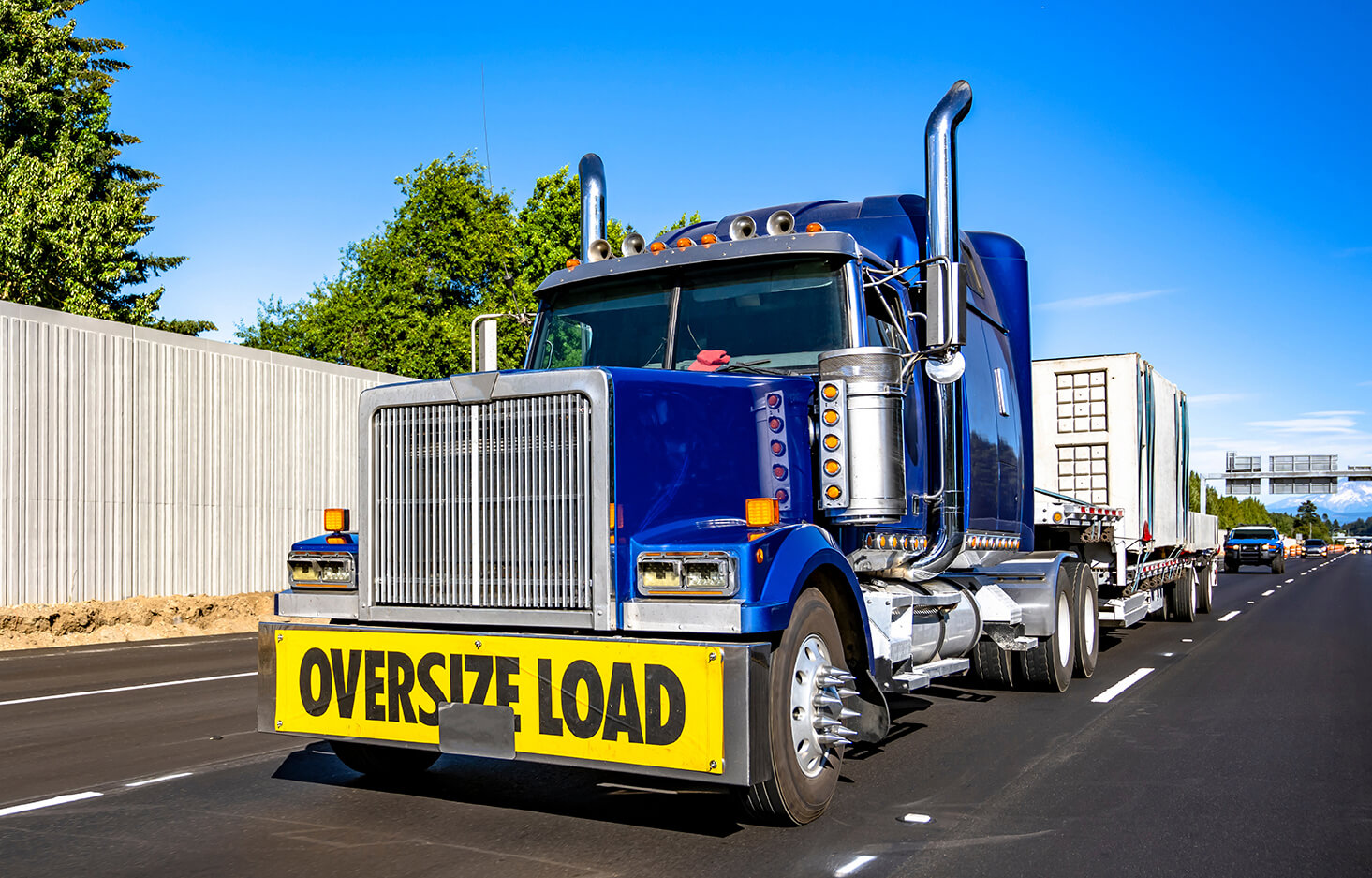
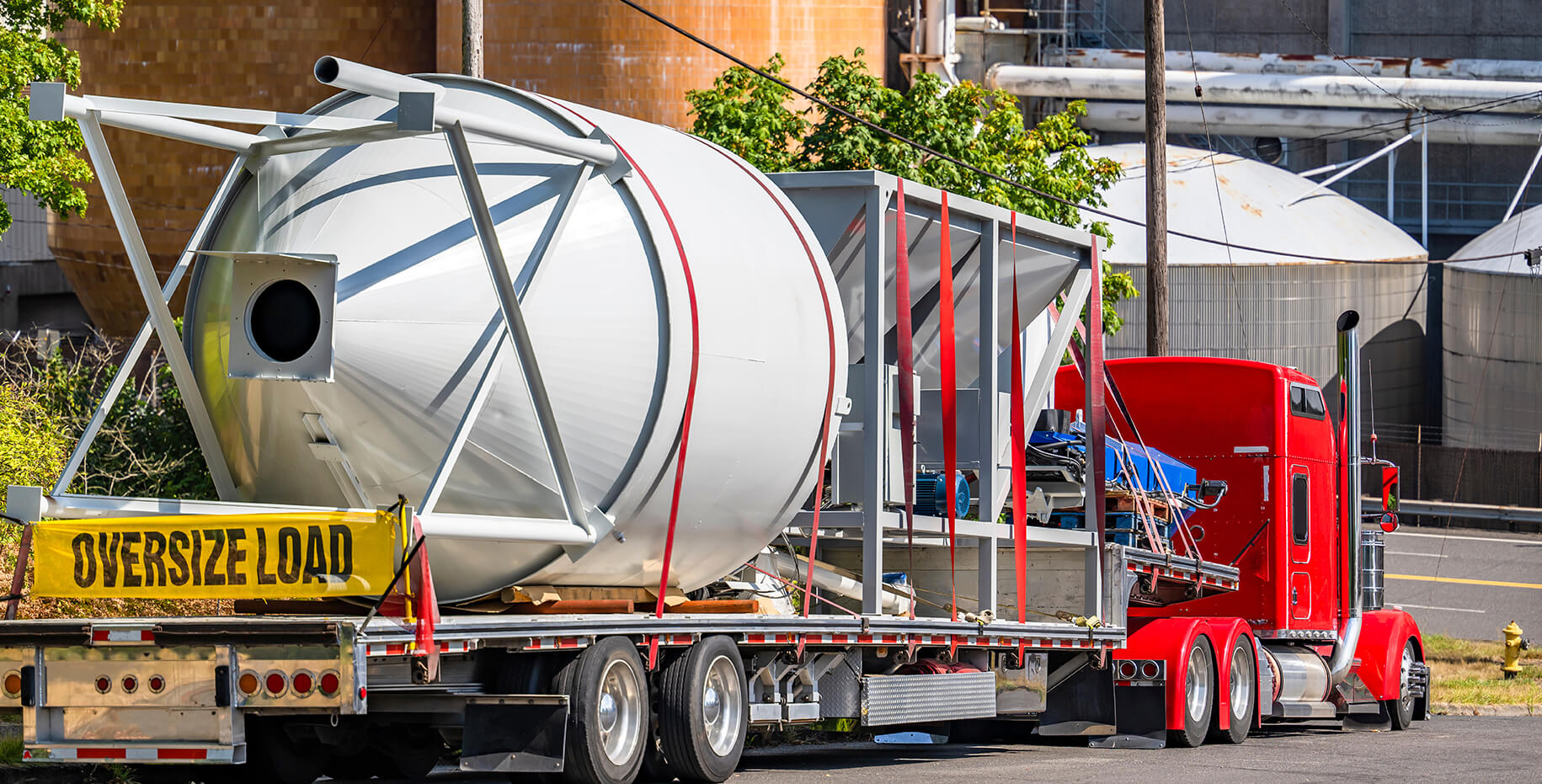
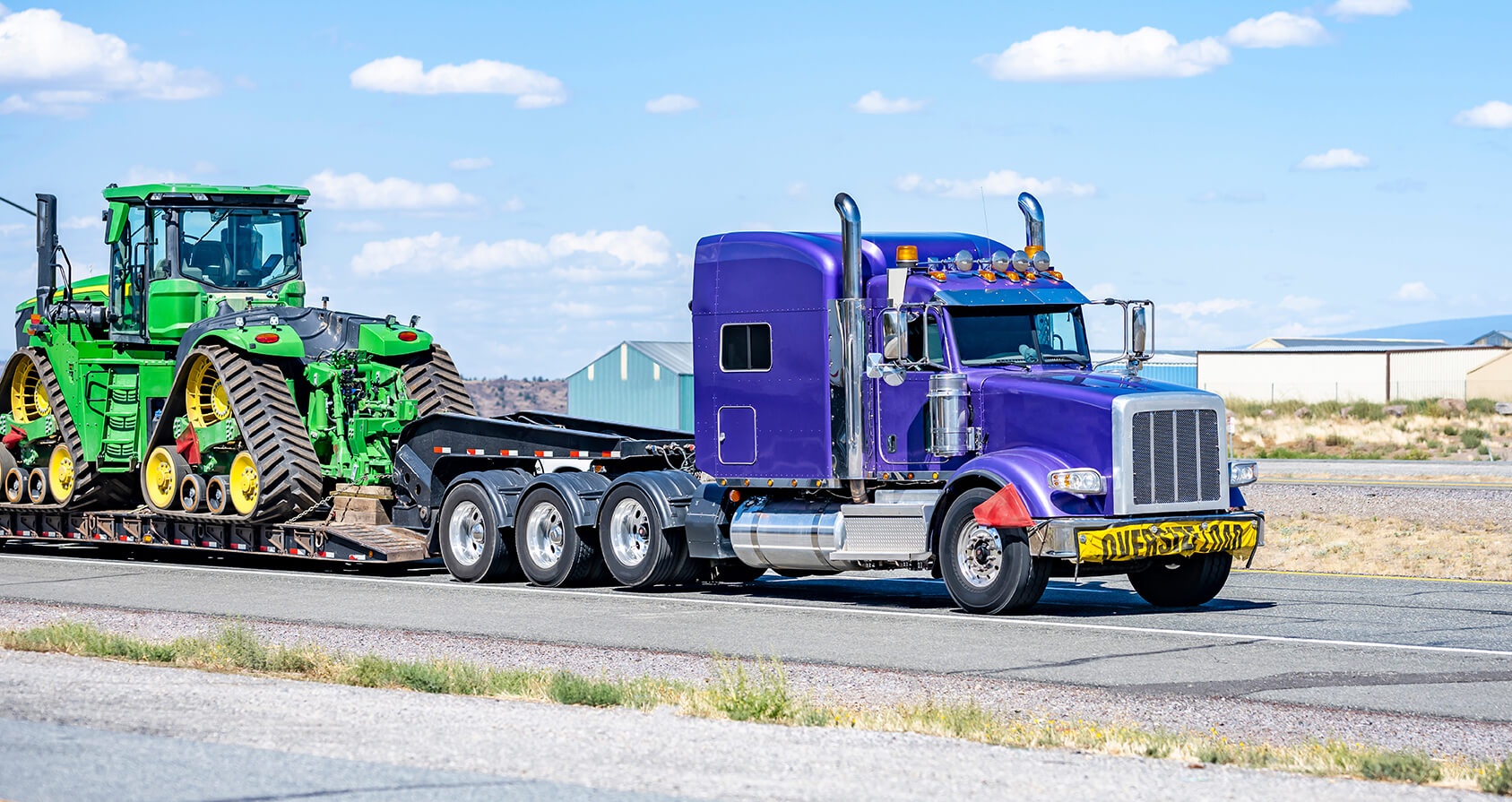
Heavy haul trucking involves the transport of freight that exceeds standard legal weight, height, width, or length limits set by state and provincial transportation authorities. Because this kind of freight can’t move on a standard trailer or under standard permits, it requires specialized equipment, route planning, and regulatory coordination that go beyond typical full truckload (FTL) shipping. Businesses moving oversized machinery, industrial equipment, or heavy construction materials often need to work with heavy haul trucking companies that understand permitting requirements, load securement, and multi-jurisdiction compliance.
This page explains what heavy haul trucking involves, the weight and dimension standards that define an oversize load, how the shipping process typically works, what factors influence cost, and what MGA International offers as a provider of heavy haul trucking services across Canada and the United States.
What Is Heavy Haul Trucking?
Heavy haul trucking refers to the transportation of cargo that exceeds standard legal size and weight limits regulated by state or provincial authorities. This includes oversized machinery, industrial equipment, prefabricated structures, and other large cargo that cannot move using standard freight methods such as full truckload (FTL) shipping. Because oversize and overweight loads carry unique handling and regulatory requirements, they typically require specialized trailers, permits, and in some cases pilot car or escort vehicle coordination.
At What Weight and Size Does Freight Qualify as Heavy Haul?
Freight generally qualifies as heavy haul when its total weight exceeds 80,000 pounds, including the truck and trailer, in the United States and Canada. Weight thresholds vary by jurisdiction and are affected by axle weight distribution.
In general, a shipment is considered heavy haul or over-dimensional if it exceeds these standard limits:
Width: Greater than 8.5 feet (102 inches)
Height: Greater than 13.5 to 14 feet, depending on the region
Length: Over 48 to 53 feet
Weight: Typically over 80,000 lbs, including the vehicle
Freight that exceeds these measurements is considered over-dimensional and may require permits, escorts, and special routing, depending on the jurisdictions the shipment travels through.
What a Heavy Haul Trucking Companies Manage Oversize Freight
Coordinating an oversize or overweight shipment involves more than finding a truck large enough to carry the load. Heavy haul trucking companies typically manage several moving parts to keep a shipment compliant and on schedule.
MGA International’s heavy haul trucking services include:
Oversize and overweight permits
Route surveys and transportation planning
Pilot car and escort vehicle coordination
Specialized carrier scheduling
Cargo securement planning
Cross-border logistics support
Delivery scheduling and freight monitoring
Heavy Haul Trailer and Equipment Options
The right trailer configuration depends on a shipment’s dimensions, weight, and route requirements. MGA International coordinates several types of specialized trailers for heavy haul freight, including:
Flatbed Trailers: Used for transporting large industrial materials, machinery, and equipment.
Step Deck Trailers: Suited to freight that exceeds standard flatbed height limitations.
Double Drop Trailers: Used for extremely tall or heavy machinery.
Removable Gooseneck (RGN) Trailers: Allow easier loading and unloading of heavy equipment. Depending on axle configuration, RGN trailers can carry freight weighing up to 68,000 kg (150,000 lbs), with roughly 9 metres (29 feet) of deck space.
Extendable Trailers: Used for extremely heavy or specialized cargo that requires additional weight distribution.
Lowboy Trailers: Suited to tall, heavy equipment, with a lower deck height for improved clearance.
Industries That Rely on Heavy Haul Trucking Services
MGA International supports heavy haul and oversize load transportation for freight including:
Heavy Equipment Hauling Transportation for excavators, bulldozers, loaders, cranes, and paving equipment used in construction and infrastructure projects.
Industrial Machinery Transportation Shipping of manufacturing equipment, processing systems, industrial components, and other large-scale machinery.
Construction Equipment Shipping Transportation of construction equipment moving between job sites, warehouses, ports, and industrial facilities.
Energy & Oilfield Equipment Logistics Transportation of oilfield components and energy infrastructure equipment across North America.
Agricultural Equipment Transportation Movement of tractors, combines, harvesters, and other oversized farming equipment throughout Canada and the United States.
How the Heavy Haul Shipping Process Works
Freight Assessment Cargo dimensions, weight, and pickup/delivery requirements are reviewed.
Route Planning & Permit Coordination Route analysis, oversize permits, and compliance planning are coordinated based on shipment requirements.
Equipment & Carrier Scheduling The appropriate trailer configuration and qualified carriers are arranged.
Shipment Execution & Monitoring Freight is transported with ongoing communication and shipment tracking.
Delivery Completion Delivery and shipment confirmation are coordinated, with communication maintained throughout.
What Influences Heavy Haul Trucking Costs?
Heavy haul shipping costs can vary based on several factors, including:
Distance and Route Complexity: Long-distance or remote destinations can affect pricing.
Load Dimensions and Weight: Larger and heavier shipments require more specialized equipment and permitting.
Permit and Escort Fees: Over-dimensional loads may require multiple state or provincial permits and pilot cars.
Special Handling Needs: Cranes, rigging, or custom crating add to the scope of a shipment.
Fuel and Market Conditions: Fuel surcharges and seasonal demand can also affect pricing.
Because these factors vary by shipment, MGA International provides customized quotes based on your specific freight and route.
Benefits of Working with a Specialized Heavy Haul Carrier
Oversize and overweight freight comes with logistical and regulatory demands that standard carriers aren’t set up to handle. Working with a heavy haul trucking company can help with:
Access to appropriate equipment for oversized or overweight freight, from flatbeds to RGN and lowboy trailers.
Permitting and compliance coordination across the state or provincial jurisdictions a shipment travels through.
Coordinated route planning, including pilot car or escort vehicle arrangements where required.
Cross-border logistics support for shipments moving between Canada and the United States.
What to Look for in Oversize Load Trucking Companies
Businesses comparing oversize load trucking companies are often trying to figure out which provider can manage their shipment safely and in compliance with regulations. A few factors worth evaluating:
Permitting knowledge: Does the company understand the permit requirements in the states or provinces your shipment will travel through?
Escort and pilot car coordination: Can they arrange escort vehicles where required by regulation?
Specialized equipment access: Do they work with the trailer types your freight needs: flatbed, step deck, RGN, lowboy, or extendable?
Route planning experience: Have they handled routes with bridge, height, or weight restrictions similar to yours?
Communication: Will you have a consistent point of contact throughout the shipment?
MGA International is a family-owned and operated logistics company, founded in 1998 and headquartered in Etobicoke, Ontario within about 130 kilometres of the Canada–U.S. border. The company provides heavy haul trucking services across Canada and the United States, managing permitting, route planning, escort coordination, and carrier scheduling for oversize and overweight freight.
Request a Heavy Haul Trucking Quote
If you’re evaluating heavy haul trucking companies for an upcoming oversize or overweight shipment, MGA International’s logistics team can help with permitting, route planning, equipment selection, and carrier scheduling.
A shipment is generally classified as heavy haul when it exceeds 80,000 lbs in total weight, or exceeds standard dimension limits typically over 8.5 feet wide, 13.5 to 14 feet tall, or 48 to 53 feet long. Exact thresholds vary by state and province.
Permits are generally required for loads that exceed standard weight, height, or width limits, and requirements vary by region. Heavy haul trucking companies typically manage the permit process on the shipper's behalf to help the load comply with the regulations of each jurisdiction it travels through.
Useful criteria include permitting knowledge, the ability to coordinate escort or pilot vehicles where required, access to the right trailer types for your freight, route planning experience, and clear, consistent communication throughout the shipment.
Full truckload (FTL) shipping generally involves freight that fits within standard legal size and weight limits and moves on standard trailers. Heavy haul trucking is used when freight exceeds those limits, which typically requires specialized trailers, permits, and additional route planning.
Expedited Shipment available on Request Single drivers can travel approximately 500 miles per day, depending on shipment details. Add 1 day extra for less-than-truckload shipments. Check with dispatch for actual times. Team Drivers available upon request.
Greg Grimes got it done. I had an unusual shipment that he took on seriously and professionally. Greg was very responsive and communicative, worked many different angles to get me a good price, and overcame several logistical challenges. I would definitely use MGA again.
We have made several trips to Toronto for the 2013 PGA Championship and over the course of those trips we have gotten to know the principles of this organization well. They are headquartered in Toronto and are great people. If you need to reach out to them, ask for Greg or Brad Grimes and let them know you heard of them through this note and they will take good care of you.
Can count on MGA for all my shipping requirements. Fantastic personnel and service.
DO YOU STILL HAVE A QUESTION REGARDING OUR SERVICES?
Simply reach out via telephone, email, live online chat or use our web-based RFQ form. Our logistics team will take care of the rest.