
Quick Quote

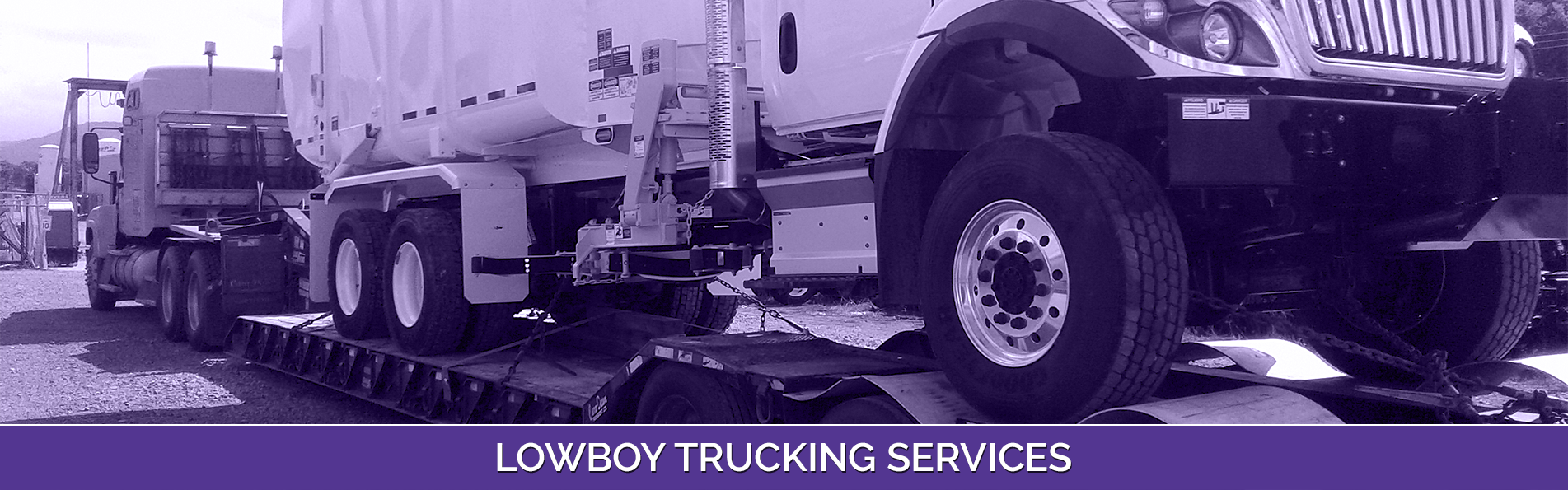
Lowboy trucking companies move freight that standard trailers cannot legally handle. Bulldozers, excavators, transformers, drilling rigs, and wind turbine sections. Loads go on a lowboy when height, weight, or width pushes a flatbed past its legal limits.
MGA International provides lowboy transport services across Canada and the USA. After 25 years hauling heavy equipment, we know where moves tend to go wrong. The wrong trailer. A missing permit. An escort booked two days too late. This page explains what a lowboy trailer does, what hiring one usually costs, and what to check before choosing a carrier.
A lowboy trailer keeps cargo much closer to the road than a standard flatbed. The deck drops twice, once behind the gooseneck and again before the rear wheels. Most lowboy decks sit 18 to 24 inches above the ground. A standard flatbed sits at roughly four feet.
Height is the main reason shippers choose a lowboy. An 11-foot excavator, for example, has more room under a 13-foot 6-inch overpass when the trailer deck sits low. Put the same excavator on a regular flatbed, and the combined height often exceeds the legal limit before the truck leaves the yard.
Weight capacity depends on axle count. A two-axle lowboy handles about 40,000 pounds. Tri-axle setups reach 60,000 to 80,000 pounds. Multi-axle configurations with a Jeep and booster dollies at the front and rear reach 80,000 pounds and beyond under the right rules and permits.
Four common designs cover most lowboy work. The loading method matters as much as the rated capacity.
Fixed gooseneck: The neck stays attached. Crews load from the rear with ramps or use a crane. The design has fewer moving parts and usually costs less to rent.
Hydraulic detachable gooseneck: Often called an RGN. Hydraulic cylinders lower the front of the trailer to ground level. Self-propelled equipment drives straight onto the deck, so a crane is not needed for loading.
Mechanical detachable gooseneck: This version weighs less than many hydraulic units and suits jobs where extra deck length matters more than fast drive-on loading.
Mechanical folding gooseneck: The ramp folds down by hand instead of using hydraulics. Setup takes longer than an RGN, but purchase and maintenance costs tend to be lower.
There is a tradeoff here. An RGN saves loading time and makes sense for a fleet moving dozers every day. For a stationary generator going on a one-off move, a crane is often already part of the job, so paying more for an RGN might not make financial sense.
Deck height: Usually 18 to 24 inches, the lowest range among common semi-trailer designs.
Legal overall width: 8.5 feet.
Maximum legal overall height in most states and provinces: 13 feet 6 inches. Some routes allow 14 feet.
Maximum legal cargo height on a standard lowboy: Roughly 11 feet 6 inches to 12 feet, depending on deck height and tie-down hardware.
Well length: About 24 to 29 feet on a standard setup. Extendable and specialized units reach 50 feet.
Two-axle capacity: About 40,000 pounds.
Tri-axle capacity: About 60,000 to 80,000 pounds.
RGN capacity by axle count: Roughly 20 to 30 tons on two axles, up to 50 tons on three, and 80 tons or more on four.
Treat these figures as planning numbers, not route approval. State and provincial rules vary, so a carrier needs to check the exact route before giving you a firm quote.
Four trailer types show up in heavy equipment quotes, but each fits a different load.
A standard flatbed handles cargo up to about 8 feet 6 inches tall and 48,000 pounds. Building materials, steel, and smaller machinery often fit here.
A step deck lowers the rear section and gives you roughly another foot or two of legal height compared with a flatbed. It often suits equipment over 8 feet 6 inches but still within the step deck’s legal limits.
A lowboy or RGN makes more sense once height or weight moves beyond what a step deck handles legally. Think bulldozers, excavators, and wide agricultural equipment.
The lowboy versus RGN choice comes down to loading. Self-propelled machinery favours an RGN because the equipment drives onto the deck. A dead machine needing a crane or winch often fits a fixed gooseneck at a lower cost.
Construction equipment makes up a large share of lowboy freight: Excavators, bulldozers, wheel loaders, backhoes, compactors, cranes, and asphalt pavers all show up on these trailers.
Energy and renewables: Wind turbine blades, tower sections, and nacelles move on extendable lowboys built for long loads. Transformers and generators also travel to substations on lowboy equipment.
Oil and gas: Drilling rigs and field equipment often require lowboys, so some carriers keep dedicated equipment for these moves.
Mining: Haul trucks, drilling equipment, and crushers.
Agriculture: Combines and large tractors often need a lowboy once their dimensions exceed flatbed limits.
Manufacturing and industrial: Hydraulic presses, boilers, CNC machines, and assembly line components.
Military and government: Tanks, armoured vehicles, and self-propelled artillery often move on lowboys under contracts requiring security clearances.
A lowboy is not automatically the right trailer for every item above. Some equipment fits a step deck. The deciding issue usually comes down to height, weight, width, loading method, or a customer’s insurance requirements.
Standard weight rules set an 80,000-pound gross limit for a legal load in many US jurisdictions. Width generally stops at 8.5 feet, while height often stops around 13 feet 6 inches. Cross one of these limits, and you need an oversize or overweight permit for each state or province on the route.
Escort requirements depend on the load and jurisdiction. A load over 12 feet wide often needs one pilot car. At 14 feet wide, many jurisdictions require two, one in front and one behind. Height and length also trigger escort rules, while some states require law enforcement support when a load becomes wide enough to affect traffic lanes.
You do not want to sort all of this out after the truck starts moving. A carrier with in-house permitting checks each jurisdiction, books the required escorts, and reviews bridge and overpass clearances before dispatch. Miss one permit and the truck might sit at a weigh station while someone tries to fix paperwork a week after the move should have been planned.
Many lowboy transportation companies provide mileage-based quotes, but heavy equipment moves are inherently more complex than standard flatbed or dry van freight. Oversize permits, specialized trailers, escort vehicles, and specific driver qualifications all contribute to the added planning and coordination required for these moves.
Distance: A 150-mile move often carries a higher per-mile rate than a 1,000-mile move because permit, positioning, and loading costs spread across fewer miles.
Weight and dimensions: A heavier or taller load might need extra axles, additional permits, or a route survey covering bridges and overpasses.
Loading method: Equipment that can drive onto an RGN typically costs less to load than a non-operational machine that requires a crane or winch. Adding crane or winch service increases the overall cost and varies depending on the specific job.
Permits and escort requirements: Oversize loads often need pilot cars, and each escort vehicle adds coordination and logistical planning to the move. Permit fees vary by state and depend on the size, weight, and route of the shipment, with requirements changing based on regional regulations.
One detail gets missed in price comparisons. A low quote might leave out an escort, permit, route survey, or special loading charge. Ask for an itemized quote before comparing one carrier with another.
Trailer variety comes first. Any of the lowboy transportation companies with fixed gooseneck and RGN options have more ways to match the trailer to your equipment.
Route coverage: A company running Canada and US lanes every day deals with both sides of the border instead of learning the process for your shipment.
Ask who handles permits: If the carrier files them in-house, you have a clear place to go when route requirements change. If a third party handles them, ask who owns the timeline.
Check insurance against the cargo value: Heavy equipment often exceeds the limits of standard dry van policies, so it’s important to ensure the carrier’s cargo insurance aligns with the value of the machinery being transported. MGA’s vetted carrier network helps protect your shipment by matching the right coverage to the right load.
You also want one person who knows the shipment. A dispatcher familiar with the equipment, route, pickup window, and delivery site is easier to work with than a call centre where each call starts from zero.
References also help big time. Ask for a shipper who moved equipment similar to yours, rather than relying on a page filled with generic testimonials.
MGA International has provided lowboy transport services from Toronto for more than 25 years. We move excavators, dozers, wheel loaders, skid steers, compactors, loader backhoes, and inoperable machinery across Canada and the USA. We quote fixed gooseneck and RGN configurations based on how your equipment needs to load.
Lowboy work sits within a larger fleet. A step deck might suit one shipment. An RGN might make more sense for drive-on equipment. A move beyond standard legal limits might need heavy haul equipment. You still deal with one point of contact instead of being passed to a subcontractor.
Before a truck leaves, we plan around bridge clearances and permit requirements. Those checks matter most when a route has a low overpass or a provincial requirement you did not expect.
Send us the weight, dimensions, pickup point, and delivery point for your shipment. We will tell you which trailer fits and give you the move cost before you commit.
A fixed lowboy has a gooseneck attached to the trailer and usually loads from the rear. An RGN, or removable gooseneck, detaches at the front and lowers to ground level, allowing self-propelled equipment to drive onto the deck. RGN describes a specific lowboy design.
A two-axle lowboy carries about 40,000 pounds. Tri-axle setups reach 60,000 to 80,000 pounds. Specialized multi-axle rigs go higher when the route and permits allow the additional weight.
Loads over 8.5 feet wide, about 13 feet 6 inches tall, or 80,000 pounds generally need oversize or overweight permits in each state or province along the route. Wider and taller loads often need pilot cars as well.
Common loads include excavators, bulldozers, wind turbine components, drilling rigs, mining equipment, large agricultural machinery, industrial equipment, and military vehicles.
Check for fixed gooseneck and RGN trailers, in-house permitting, coverage for your route, and insurance suited to the value of your equipment. Ask for references from shippers with similar loads.
Yes, carriers with the required authority and permits handle Canada-US lowboy shipments. MGA International moves lowboy freight between Canada and the USA as part of its lowboy transport services.


Expedited Shipment available on Request
Single drivers can travel approximately 500 miles per day, depending on shipment details. Add 1 day extra for less-than-truckload shipments. Check with dispatch for actual times. Team Drivers available upon request.
Greg Grimes got it done. I had an unusual shipment that he took on seriously and professionally. Greg was very responsive and communicative, worked many different angles to get me a good price, and overcame several logistical challenges. I would definitely use MGA again.
We have made several trips to Toronto for the 2013 PGA Championship and over the course of those trips we have gotten to know the principles of this organization well. They are headquartered in Toronto and are great people. If you need to reach out to them, ask for Greg or Brad Grimes and let them know you heard of them through this note and they will take good care of you.
Can count on MGA for all my shipping requirements. Fantastic personnel and service.

 Optimized by Seraphinite Accelerator