
Quick Quote

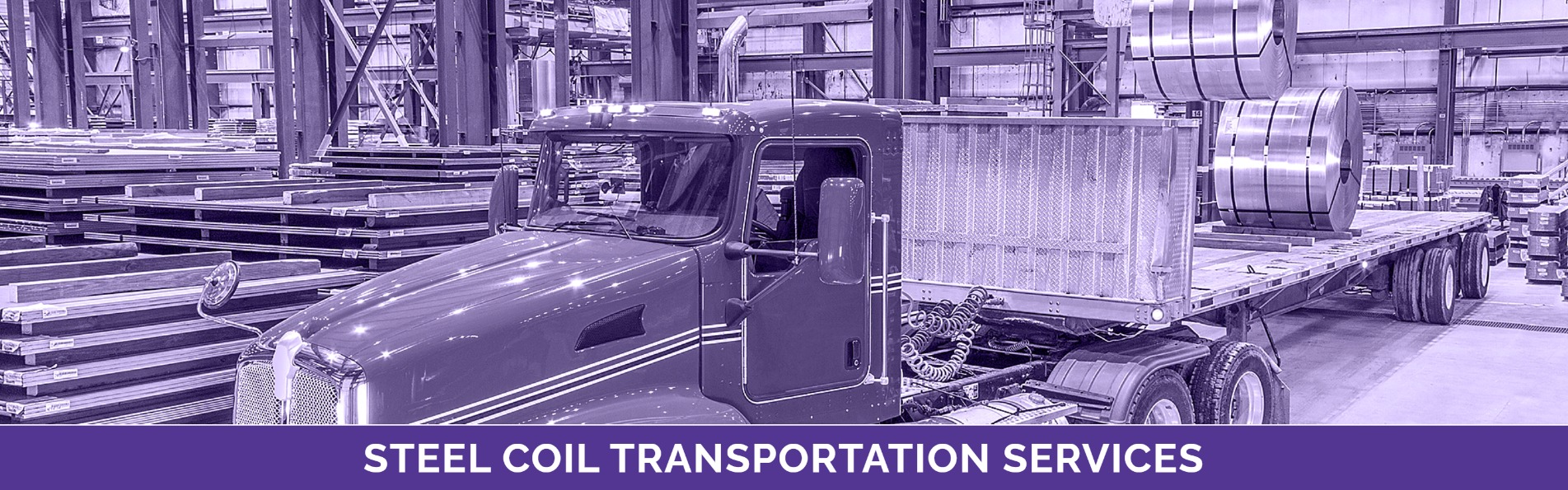
Steel coils are among the heaviest, densest, and most unforgiving loads in North American freight. A single hot-rolled coil can weigh anywhere from 5,000 to 50,000 pounds. Its cylindrical shape creates a dangerously small contact surface on a trailer deck. One improperly secured coil on a flatbed can shift, roll, or fall — with catastrophic consequences for the driver, other road users, and your cargo.
MGA International Logistics has been moving steel coils safely across the United States and Canada for over 25 years. We know exactly what it takes to secure, haul, and deliver this cargo without incident — from the correct coil rack configuration and chain tie-down protocol to the weight distribution rules that govern every jurisdiction we cross.
Whether you ship single coils or full flatbed loads of hot-rolled, cold-rolled, or galvanized steel, our team assigns the right equipment, the right carrier, and the right securement method every time.
Steel coil transportation is the specialized movement of rolled steel products — including hot-rolled coils (HRC), cold-rolled coils (CRC), galvanized coils, and stainless steel coils — using flatbed or specialized coil trailer equipment. Steel coils are classified as heavy freight and are subject to strict load securement rules under FMCSA regulations in the United States and CCMTA National Safety Code standards in Canada.
Unlike standard flatbed cargo, steel coils present unique hazards because:
Steel coil loads are governed by specific securement standards that go beyond general cargo tie-down rules. MGA International’s carrier partners understand these standards and apply them on every load — not just as a compliance requirement, but as a fundamental operating principle.
Not all steel coils are the same. The type of steel, its surface finish, weight, and coil dimensions all affect how it must be loaded, secured, and handled. MGA International handles the full spectrum of steel coil classifications:
| Coil Type | Typical Weight Range | Common Origin Industries | Key Handling Considerations |
| Hot-Rolled Coil (HRC) | 10,000 – 50,000 lbs | Steel mills, auto manufacturing | Rough edges require edge protection; high temp during production may affect early handling |
| Cold-Rolled Coil (CRC) | 8,000 – 40,000 lbs | Appliance, automotive body panels | Surface-sensitive — contact damage causes claims; requires clean dunnage |
| Galvanized Steel Coil | 8,000 – 35,000 lbs | Construction, HVAC, roofing | Zinc coating is scratch-prone; must avoid metal-on-metal contact |
| Stainless Steel Coil | 5,000 – 25,000 lbs | Food equipment, medical devices | Premium cargo — requires dedicated clean equipment; no rust contamination |
| Electrical Steel (GOES) | 5,000 – 20,000 lbs | Transformer manufacturing, EV motors | Extremely damage-sensitive; grain orientation must be preserved |
| Aluminum Coil | 5,000 – 30,000 lbs | Automotive, packaging, aerospace | Lightweight but wide — deck width management critical; no steel contact |
Steel coil transport requires specific trailer configurations depending on coil diameter, weight, and quantity. MGA International works with carriers across North America running the full range of flatbed and coil-specific equipment:
| Equipment Type | Max Legal Payload | Steel Coil Application |
| Standard Flatbed (48′ / 53′) | Up to 48,000 lbs | Most common for single or multiple coils under legal weight. Coil racks (pipe racks) or cradles used to stabilize load. Chain tie-downs required per FMCSA Part 393. |
| Step Deck (Single Drop) | Up to 46,000 lbs | Used for taller coil loads or when loading height exceeds standard flatbed clearance limits. Allows upright stacking with coil racks. |
| Coil Trailer (Coil Trough) | Up to 48,000 lbs | Specialized trailer with a trough or depression in the deck designed specifically for coil transport. Eliminates need for external cradles. Ideal for high-volume steel shippers. |
| Double Drop / Lowboy | Up to 80,000+ lbs (with permits) | For extremely heavy coil shipments or oversize coils requiring over-dimensional permits. Used in heavy industrial steel applications. |
| Flatbed with Coil Racks/Cradles | Varies by rack config | Coil racks (A-frame or pipe) used on standard flatbeds to create a cradle for round coils. Required for any coil load to prevent rolling. Positioned according to coil diameter and weight. |
Steel coil securement is one of the most heavily regulated areas of North American freight transport — and for good reason. An unsecured coil at highway speeds is an extremely dangerous projectile. The consequences of a securement failure go far beyond cargo damage.
MGA International’s carriers follow these governing standards on every steel coil load:
| Standard / Regulation | What It Requires for Steel Coil Transport |
| FMCSA 49 CFR Part 393 (USA) | Coils must be secured with at least one tiedown per 10 ft of load length. Coils with eyes vertical require coil racks and front/rear blocking. Working load limit (WLL) of tiedowns must meet aggregate requirements based on coil weight. Chains are required for coils over 5,000 lbs — wire rope or webbing alone is insufficient. |
| CCMTA National Safety Code (Canada) | Coil transport in Canada follows NSC Standard 10 for cargo securement. Requirements mirror FMCSA standards but are enforced provincially. Weight limits vary by province and road designation (secondary roads may have lower spring load restrictions). |
| Coil Eye Vertical vs. Horizontal | Eyes vertical (coil standing upright): requires blocking fore and aft plus minimum 2 tiedowns. Eyes horizontal (coil on its side): requires cradle or trough plus minimum 2 tiedowns encircling the coil. Configuration determines what equipment is required. |
| Chain Grade Requirements | Grade 70 transport chain (gold color) is the industry minimum for steel coil. Grade 80 or 100 alloy chain is used for heavier coils. Binders must be appropriately rated. All chains inspected before each load. |
| Weight Distribution / Bridge Laws | Each state and province enforces bridge formula calculations. A single coil of 30,000+ lbs requires careful axle placement to avoid overweight violations. MGA calculates axle weights before dispatch on every heavy coil load. |
Steel coil logistics touch nearly every segment of North American manufacturing and construction. MGA International serves the following industries with specialized steel coil transport solutions:
| Automotive Manufacturing Steel coils are the raw material for body panels, structural components, and chassis parts. Just-in-time delivery to stamping plants is critical — a missed window shuts down a production line. | Construction & Infrastructure Structural steel coils supply rebar, decking, and framing manufacturers. Seasonal demand spikes require carriers with flexible capacity and proven cross-border capability. | Appliance Manufacturing Cold-rolled and galvanized coils supply major appliance plants across the Great Lakes region. High surface quality standards demand clean equipment and careful handling. |
| Energy & Oil & Gas Pipe, casing, and tubular goods originate from steel coil stock. Energy sector coil loads often involve heavy weights and oversized dimensions requiring permit coordination. | HVAC & Roofing Galvanized and aluminum coils supply HVAC manufacturers and metal roofing fabricators across the US and Canada. Shipments are often LTL or partial truckload from service centers. | Steel Service Centers Service centers receive coils from mills and redistribute to manufacturers. MGA supports both inbound mill-to-service-center and outbound service-center-to-manufacturer moves. |
The US-Canada steel trade corridor is one of the highest-volume bilateral freight lanes in North America. Steel mills in Hamilton, Ontario; Sault Ste. Marie; and Dofasco supply US manufacturers. American mills in Indiana, Ohio, and Michigan ship to Canadian service centers and auto plants.
Moving steel coils across the border adds several layers of complexity that MGA International manages in-house:
For shippers managing active steel trade lanes, MGA International serves as a single logistics point of contact for all cross-border steel coil movements — from documentation to delivery confirmation.
25+ Years Moving Steel Coils
MGA International has been transporting steel coils across North America since the company’s founding. That experience means carrier relationships with steel-specialized fleets, knowledge of every major mill-to-manufacturer route, and a team that has solved every coil transport challenge.
Carriers Pre-Qualified for Coil Freight
Not every flatbed carrier has coil racks, rated chains, or drivers trained in steel coil securement. MGA works only with carriers whose equipment and driver qualifications meet steel coil transport standards — verified before every load.
Weight and Permit Management
Heavy coil loads require axle weight calculations, bridge formula compliance, and permit coordination across multiple jurisdictions. Our team handles this before the truck rolls — not at the scale.
Cross-Border Documentation Expertise
For US-Canada steel moves, customs documentation errors cause costly border delays. MGA’s in-house team prepares all required documents in advance — ACE/ACI e-Manifest, commercial invoices, certificates of origin, and tariff classification.
Real-Time GPS Visibility on Every Load
Steel coil shipments represent significant cargo value. MGA provides continuous GPS tracking so your team always knows load location, status, and estimated arrival — not just terminal checkpoint updates.
Damage-Free Delivery Commitment
Steel coil damage claims come from improper securement, equipment contact, and moisture exposure. MGA’s carrier selection, equipment standards, and pre-load inspection process are designed to eliminate these causes.
Moving steel coils across the US or Canada requires a carrier that understands the cargo — not just the route. MGA International has the equipment, the expertise, and the cross-border capability to move your steel coil freight safely and on schedule.
| Request a Steel Coil Quote | Call Dispatch 24/7 | Email the Freight Team |
Steel coil transportation requires specialized equipment, secure strapping, and compliance with transport regulations to ensure safe delivery. MGA International Logistics offers end-to-end solutions, using experienced drivers and reliable vehicles designed to handle the weight and dimensions of steel coils.
Yes, steel transportation must adhere to specific safety and weight regulations in Canada and the USA. MGA International Logistics ensures compliance with all guidelines, including proper load securing methods and weight distribution, making us a trusted choice among steel hauling trucking companies.
Steel trucking companies use flatbeds, step decks, and specialized trailers for heavy and oversized loads. MGA International Logistics partners with a trusted network of carriers across Canada and the USA, ensuring access to the right equipment for safe and efficient steel coil transportation.
Yes. Steel coils move across the Canada-US border daily on major trade lanes. Cross-border moves require customs documentation (commercial invoice, bill of lading, certificate of origin), ACE/ACI e-Manifest pre-filing, and compliance with applicable tariff classifications. MGA International manages all cross-border documentation in-house for steel coil shipments.
A standard flatbed in the United States has a legal maximum of approximately 48,000 lbs of cargo on a 48-foot trailer, subject to axle weight limits and bridge formula calculations. Single coils can weigh up to 50,000+ lbs, which may require oversize or overweight permits. Canada has similar limits, though provincial bridge formula rules vary and seasonal spring restrictions may apply.
Yes. For smaller steel coil shipments that do not fill a full flatbed, MGA International offers partial truckload (PTL) options where coil loads share trailer space with compatible freight. Our team ensures that partial coil loads are still properly racked, secured, and transported by carriers with steel coil handling experience.


Expedited Shipment available on Request
Single drivers can travel approximately 500 miles per day, depending on shipment details. Add 1 day extra for less-than-truckload shipments. Check with dispatch for actual times. Team Drivers available upon request.
Greg Grimes got it done. I had an unusual shipment that he took on seriously and professionally. Greg was very responsive and communicative, worked many different angles to get me a good price, and overcame several logistical challenges. I would definitely use MGA again.
We have made several trips to Toronto for the 2013 PGA Championship and over the course of those trips we have gotten to know the principles of this organization well. They are headquartered in Toronto and are great people. If you need to reach out to them, ask for Greg or Brad Grimes and let them know you heard of them through this note and they will take good care of you.
Can count on MGA for all my shipping requirements. Fantastic personnel and service.

 Optimized by Seraphinite Accelerator