
Quick Quote


How rail and truck integration builds more resilient logistics
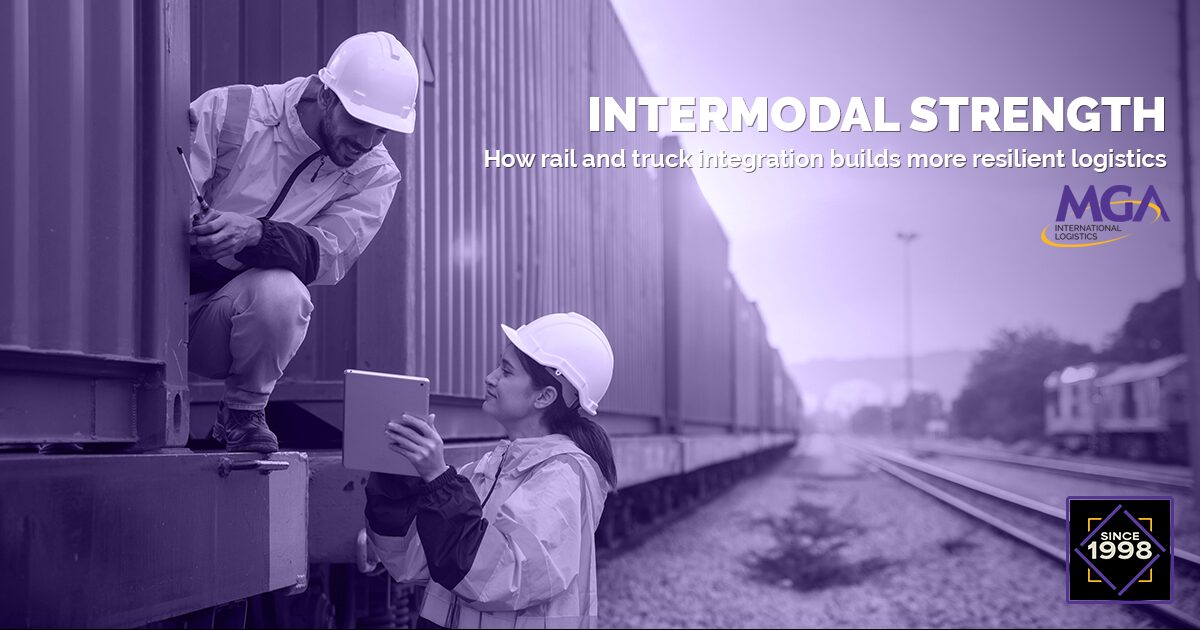
Supply chain disruptions continue to impact freight operations across North America. Rising fuel costs, driver shortages, and delivery delays are forcing businesses to rethink how freight moves.
Intermodal trucking companies can offer a more resilient solution by combining rail efficiency with trucking flexibility. This integrated approach helps businesses control costs, reduce risk, and maintain consistent freight movement across long-distance and cross-border lanes.
Intermodal transportation services combine rail and truck shipping to improve freight efficiency, flexibility, and long-distance cargo movement.
Businesses use intermodal shipping services to reduce transportation costs, improve reliability, and support cross-border freight delivery.
Transportation resilience depends on flexibility. Relying on a single mode increases exposure to disruptions such as fuel spikes, weather delays, and capacity shortages.
Intermodal shipping reduces these risks by distributing freight across both rail and truck networks. Rail provides fuel-efficient long-distance movement, while trucks maintain direct access to facilities and final delivery points.
This multi-mode structure improves overall network stability and keeps freight moving under changing conditions.
Businesses moving industrial materials, retail products, or oversized freight often benefit from this integrated shipping model.
Rail transportation remains one of the most efficient solutions for moving high-volume freight. A single train can carry the equivalent of hundreds of truckloads while consuming significantly less fuel per ton-mile.
Rail systems also help reduce highway congestion. This supports more predictable transportation timelines for businesses operating across multiple states or provinces.
Intermodal transportation services allow companies to combine rail efficiency with truck accessibility. Freight containers can move seamlessly between transportation modes without unloading cargo repeatedly. This reduces handling risks and supports cargo protection throughout transit.
For businesses moving freight across North America, rail integration supports stronger long-distance shipping performance.
Rail alone cannot complete door-to-door delivery. Trucks remain essential for pickup, local transportation, and final-mile distribution.
Experienced intermodal trucking companies coordinate closely with rail terminals to keep freight moving efficiently between transfer points and customer destinations. Trucking networks provide the responsiveness required to meet delivery timelines where rail alone cannot.
This integration improves delivery performance for businesses requiring time-sensitive freight transportation.
These trucking capabilities help businesses maintain operational continuity across different transportation environments.
Cross-border logistics require detailed coordination. Delays at border crossings can affect delivery schedules and inventory management.
Intermodal shipping services support smoother freight movement between Canada and the United States by combining structured rail schedules with responsive trucking coordination, helping reduce delays during high-volume shipping periods and border congestion.
Companies operating in manufacturing, retail, construction, and industrial sectors often require dependable cross-border transportation to maintain supply chain continuity.
MGA International specializes in coordinated intermodal freight solutions across the Canada–U.S. corridor, leveraging established rail partnerships and a flexible trucking network to deliver consistent, door-to-door performance.
Intermodal transportation helps businesses control long-haul shipping costs by shifting a significant portion of freight movement onto more fuel-efficient rail networks. Combined with flexible trucking for pickup and delivery, this model improves asset utilization and reduces overall transportation spend without sacrificing service levels.
Sustainability has become an important factor in freight planning. Many businesses now evaluate transportation providers based on environmental efficiency alongside operational performance.
Rail transportation produces lower greenhouse gas emissions than long-haul trucking alone. By integrating rail into freight operations, intermodal shipping services help reduce overall fuel consumption across transportation networks.
Companies seeking environmentally responsible shipping strategies often use intermodal transportation to support internal sustainability initiatives without sacrificing delivery performance.
MGA International strengthens overland freight operations through reliable truck-to-rail coordination designed to support both operational efficiency and environmentally conscious transportation practices.
Intermodal transportation supports a wide range of industries requiring stable freight movement across long distances.
Industries commonly using intermodal transportation services include:
These industries often require scalable logistics solutions capable of handling varying freight volumes throughout the year.
As one of the recognized intermodal trucking companies supporting North American freight operations, MGA International provides flexible transportation solutions designed for complex shipping requirements.
Also Read :
REVOLUTIONIZING THE FREIGHT JOURNEY A look into intermodal logistics strategies
The Rise Of Intermodal Shipping Reshaping The Logistics Landscape
Modern logistics operations depend heavily on transportation visibility. Businesses require accurate freight tracking and communication throughout the shipping process.
Technology enables real-time coordination between rail schedules, terminal operations, and trucking dispatch, improving visibility across every stage of the shipment lifecycle.
Improved visibility supports better planning decisions and faster responses during unexpected transportation disruptions.
As logistics operations continue evolving, technology-driven coordination will remain essential for maintaining efficient intermodal transportation services across North America.
Businesses require transportation systems that adapt to changing market conditions. Intermodal shipping provides flexibility, scalability, and operational support across multiple freight environments.
Combining rail efficiency with trucking accessibility creates a logistics structure capable of supporting long-term freight demands. Companies can improve transportation consistency while managing operational costs more effectively.
MGA International continues supporting businesses with dependable intermodal shipping services, cross-border transportation expertise, and customized freight solutions across North America.
For businesses seeking reliable freight coordination, MGA International delivers integrated logistics support designed to keep cargo moving safely, efficiently, and without interruption.

Greg Grimes got it done. I had an unusual shipment that he took on seriously and professionally. Greg was very responsive and communicative, worked many different angles to get me a good price, and overcame several logistical challenges. I would definitely use MGA again.
We have made several trips to Toronto for the 2013 PGA Championship and over the course of those trips we have gotten to know the principles of this organization well. They are headquartered in Toronto and are great people. If you need to reach out to them, ask for Greg or Brad Grimes and let them know you heard of them through this note and they will take good care of you.
Can count on MGA for all my shipping requirements. Fantastic personnel and service.

 Optimized by Seraphinite Accelerator